Environmental Chronology: Geological Formation of Malta (35–5 million years ago)
Uncover the geological origins of the Maltese Islands (35–5 million years ago), detailing the processes of sedimentation, tectonic activity, and sea level changes that shaped the archipelago's landscape.
Summary Table: Geological Formation Period (35–5 Ma)
Long-Term Legacy of This Period
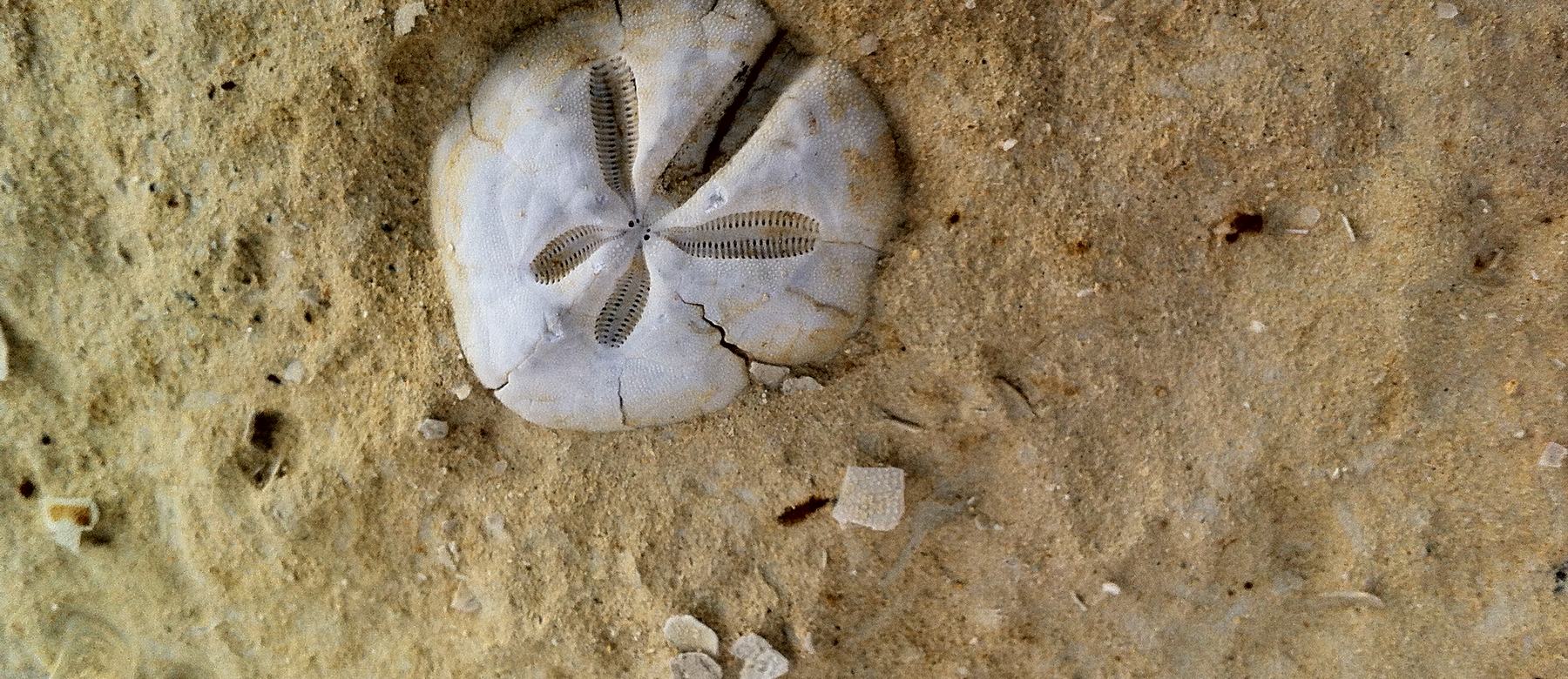
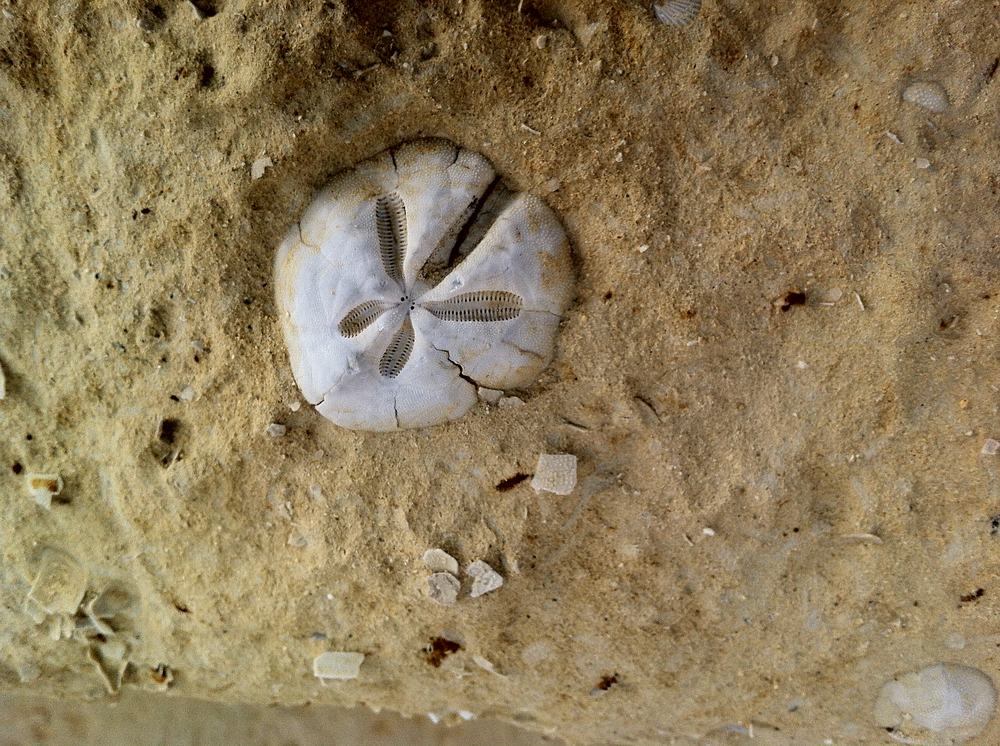
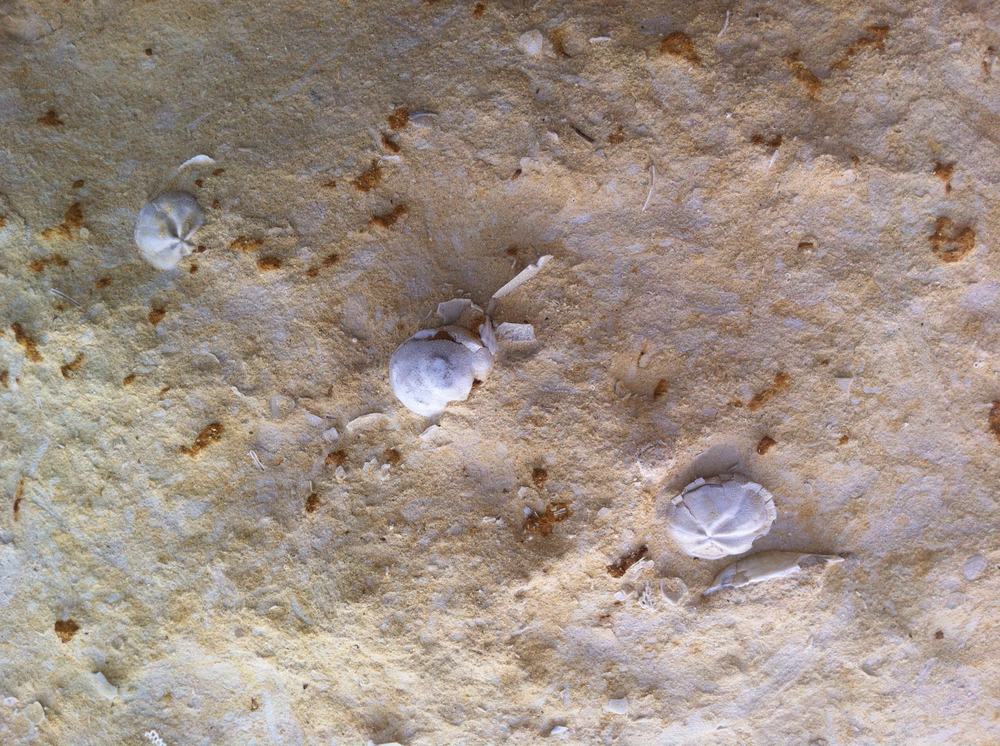
Fossil remains - Seashells
Fossil remains in sedimentary rock at Tigne Point
The Maltese Islands during their Geological Formation (ca. 35–5 million years ago) is a time when tectonics, sedimentation, and sea-level change shaped the foundations of the modern Maltese landscape. This period spans the late Eocene, Oligocene, Miocene, and into the early Pliocene, and it is entirely pre-human.
Tectonic Setting & Regional Context
Where is Malta Geologically?
Malta lies on the Pelagian Block (African Plate), between the Sicily Channel Rift Zone and the Hellenic Arc.
The region was influenced by the collision of the African and Eurasian plates:
Led to uplift, faulting, and rifting.
Created shallow marine basins ideal for limestone deposition.
Stratigraphic Sequence: Malta’s Bedrock Layers
The Maltese Islands are made of marine sedimentary rock, mainly from the Oligocene to Miocene (33–5 million years ago):
Rock Formation
Age (approx.)
Main Composition
Environmental Setting
Lower Coralline Limestone
~33–28 Ma (Oligocene)
Hard limestone
Shallow warm marine reefs
Globigerina Limestone
~28–16 Ma (Oligocene–Miocene)
Soft, yellowish limestone
Deeper, calmer marine environment (plankton‑rich)
Blue Clay
~16–12 Ma (Middle Miocene)
Silty marl and clay
Deeper marine basin, low energy
Greensand
~12–10 Ma (Miocene)
Glauconitic sandstone
Transition zone; shallow basin nearshore
Upper Coralline Limestone
~10–5 Ma (Late Miocene–Pliocene)
Hard reef limestone
Shallow reef platforms during uplift
Each layer reflects a specific marine environment, ranging from reef to deep ocean shelf.
Seashells embedded in sedimentary rock at Tigne Point
Various sea creatures embedded in sedimentary rock at Tigne Point
Fossil Evidence and Paleoecology
Fossils Found in Maltese Formations:
Lower & Upper Coralline Limestone: Corals, red algae, foraminifera, bryozoans.
Sedimentation of clay and sand; shallow seas retreating by Late Miocene
Messinian Salinity Crisis (~5.96–5.33 Ma)
Arid
Catastrophic sea level drop
Mediterranean Sea partially dried out; Malta may have briefly emerged
Formation Processes and Land Emergence
Malta’s layers accumulated under the sea for ~30 million years.
The rifting and uplift of the Pelagian Block raised the region.
By the end of the Miocene (~5 Ma), parts of the Maltese platform emerged above sea level, forming:
Ridges (Upper Coralline)
Depressions (Blue Clay valleys)
Key geological processes:
Faulting and tilting (e.g. Victoria Lines Fault)
Erosion of soft Blue Clay → created fertile valleys (e.g. Wied il-Għajn)
Karstification of limestones → caves, sinkholes, and fissures
Resulting Landscape Features
Feature
Formed By
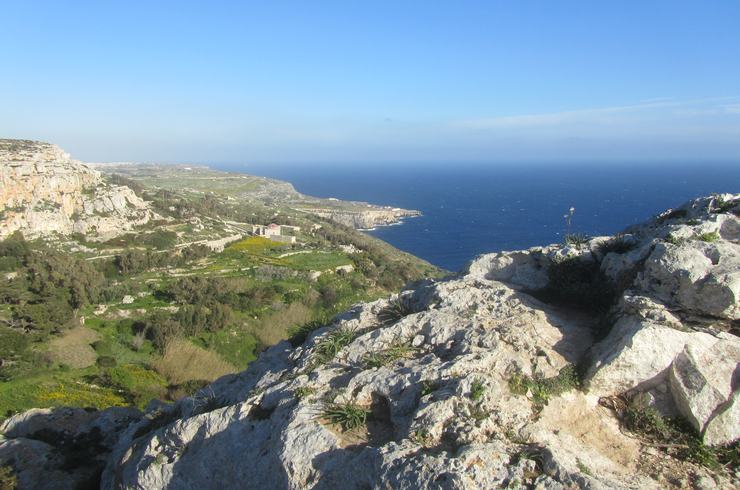
Dingli Cliffs
Marine erosion of uplifted Upper Coralline Limestone
Victoria Lines
Major fault zone (Great Fault) between limestone layers
Inland valleys
Erosion of Blue Clay beneath Upper Coralline Limestone caps
Natural harbours
Valleys later drowned by rising sea levels
Caves and sinkholes
Limestone dissolution (karst processes)
Geological Evidence Sites in Malta
Site
Significance
Dingli Cliffs
Best exposure of Upper Coralline Limestone; dramatic uplift and marine erosion showcase Malta’s highest sea cliffs (~253 m).
Blue Clay at Għajn Tuffieħa
Classic exposure of Blue Clay fostering slope instability and local spring formation where impermeable clay traps groundwater.
Globigerina quarries (e.g. Mqabba)
Fossil‑rich Globigerina Limestone widely quarried and used as Malta’s traditional building stone (“franka”), renowned for its workability and heritage use.
Fomm ir‑Riħ
Steep coastal section exposing Greensand and Blue Clay, as well as fault‑controlled syncline structure and varied stratigraphic layers.
Summary Table: Geological Formation Period (35–5 Ma)
Category
Details
Plate tectonics
African Plate collision led to rifting and uplift
Marine environments
Varied from reefs to deep-sea basins
Rock types
Mainly limestones, with clays and sands
Fossils
Rich marine life: corals, mollusks, foraminifera
Sea-level effects
Layers reflect both deep and shallow marine settings
Emergence of land
Malta likely emerged ~5 Ma (Pliocene), after the Messinian Salinity Crisis
Long-Term Legacy of This Period
✔️ Landscape Structure:
All of Malta’s topography, coastlines, and soil distribution trace back to this geological foundation.
✔️ Building Stone:
Globigerina Limestone, used in temples and modern buildings, comes from this era.
✔️ Groundwater & Soil:
Blue Clay aquicludes and Upper Coralline aquifers drive today’s water supply and spring systems.
Environmental Chronology: Pleistocene Malta (2.6 million – 11,700 years ago) – An immersive geological and ecological timeline tracing Malta’s journey through Ice‑Age landscapes, intermittent land‑bridge connections to Sicily, …
Environmental Chronology: Early Holocene & First Human Settlement (c. 5200 BCE) – An immersive timeline tracing Malta’s earliest human presence, from Mesolithic hunter‑gatherer voyagers arriving ~8500 years ago …