Global & Regional Pleistocene Context
Geography of Pleistocene Malta
Vegetation and Paleoenvironment
Fauna: Malta’s Ice Age Megafauna
Għar Dalam Cave: A Fossil Archive
Sea-Level Fluctuations and Land Bridges
Climate Change and Environmental Shifts
Summary Table: Pleistocene Malta
Legacy of the Pleistocene Epoch in Malta
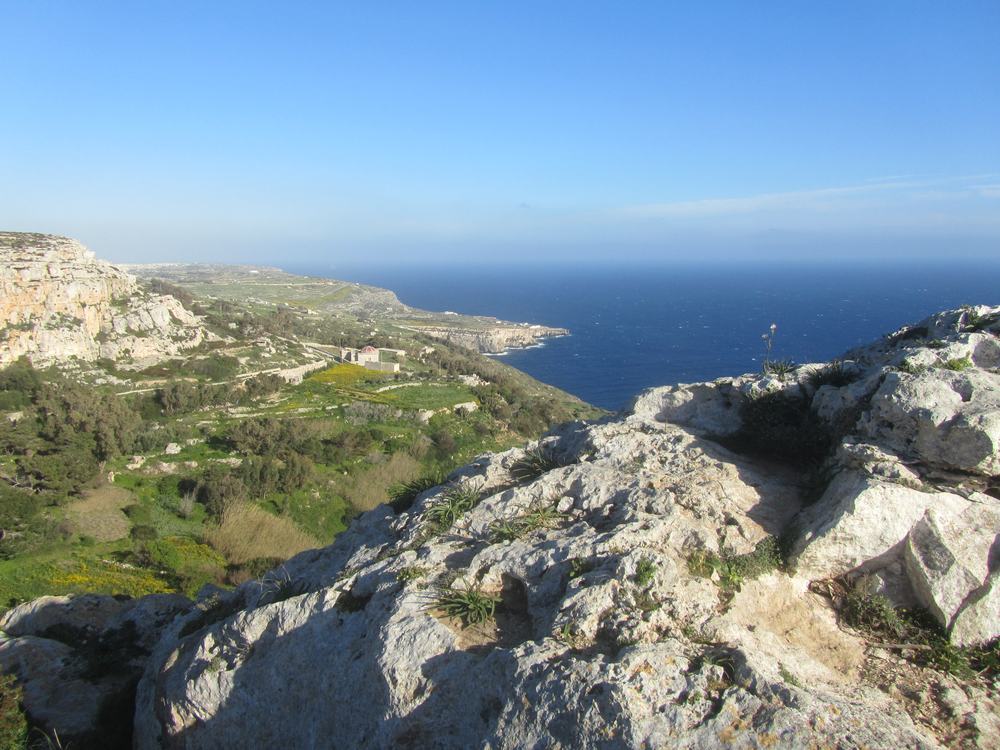
Natural state of the Maltese Islands
The Maltese Islands during the Pleistocene Epoch (2.6 million – 11,700 years ago) is a time before humans arrived, when Malta was shaped by glacial-interglacial cycles, sea level fluctuations, and the presence of unique endemic megafauna.
This period laid the geological and ecological foundations for all later human-environment interactions in Malta.
Global & Regional Pleistocene Context
| Feature | Detail |
|---|---|
| Epoch Duration | ~2.6 million – 11,700 years ago (ended with the last Ice Age) |
| Climate Pattern | Repeated glacial (cold) and interglacial (warm) periods |
| Sea Level Changes | Fluctuated up to 120 meters below and 5–10 meters above today’s levels |
| Malta’s Connection to Sicily | During glacial maxima, Malta was part of a land bridge to Sicily |
Geography of Pleistocene Malta
Glacial Periods (~120,000–11,700 years ago)
- Sea levels dropped by ~120 meters, exposing vast areas.
- Malta, Gozo, and Comino were likely part of a single large island or landmass.
- Exposed coastal plains, river valleys, and land bridges to Sicily may have formed.
Interglacial Periods
- Warmer climates and rising seas submerged low-lying land.
- Present-day island configuration re-emerged during these periods.
Key Sites:
Għar Dalam, Mgarr ix-Xini, Xagħra, and Marsaxlokk provide fossil and sediment evidence from this time.
Vegetation and Paleoenvironment
Glacial Phases (Cold/Dry)
- Dominated by steppe and grassland vegetation.
- Sparse trees: juniper, pine, some oak species.
- Open habitats supported grazing megafauna.
Interglacial Phases (Warm/Moist)
- Return of woodland and maquis:
- Holm oak (Quercus ilex), pine, wild olive, lentisk, carob
- Holm oak (Quercus ilex), pine, wild olive, lentisk, carob
- Wetter conditions led to:
- Formation of karst valleys and temporary wetlands.
- Formation of karst valleys and temporary wetlands.
Pollen Evidence
- Core samples (e.g., Burmarrad Valley) show alternating dominance of:
- Grasses and herbs (glacial)
- Trees and shrubs (interglacial)
- Grasses and herbs (glacial)
Fauna: Malta’s Ice Age Megafauna
Malta's isolation allowed the evolution of unique dwarf species from larger continental ancestors.
| Species | Scientific Name | Traits |
|---|---|---|
| Dwarf Elephant | Palaeoloxodon mnaidriensis | ~1 meter tall; herbivorous |
| Dwarf Hippopotamus | Hippopotamus melitensis | ~1 m long; likely semi-aquatic |
| Giant Swans | Cygnus equitum | Likely flightless or limited fliers |
| Deer, turtles, and dormice | Various | Migrated during low sea levels |
These species lived during glacial lowstands and were trapped as sea levels rose.
Extinction:
Most Ice Age megafauna in Malta became extinct around 10,000 BCE, likely due to:
- Climate change
- Habitat shrinkage
- Isolation and inbreeding
Għar Dalam Cave: A Fossil Archive
| Layer | Age Estimate | Contents |
|---|---|---|
| Hippopotamus layer | ~180,000–20,000 BCE | Bones of dwarf hippos, elephants, and giant swans |
| Deer layer | Later Pleistocene | Red deer, birds, turtle remains |
| Cultural layer | Neolithic (~5200 BCE) | Flint tools, pottery, domestic animal bones (post-Pleistocene) |
Sediments also contain:
- Charcoal and ash (later periods)
- Microfauna remains (e.g. bats, dormice)
- Pollen and seed remnants (climate reconstruction)
Sea-Level Fluctuations and Land Bridges
Glacial Maximum (~20,000 BCE)
- Malta was likely connected to Sicily.
- Allowed faunal migration of mainland species.
Post-Glacial Melting (After 15,000 BCE)
- Rapid sea rise isolated Malta.
- Submerged fertile coastal plains and freshwater wetlands.
Environmental Consequences:
- Shrinking habitats
- Isolation of species → dwarfism and eventual extinction
Climate Change and Environmental Shifts
Marine Isotope Stages (MIS)
- MIS 5, 3, and 1: Interglacial (warm)
- MIS 4, 2: Glacial (cold)
These climate shifts drove:
- Vegetation turnover (woodland–steppe cycles)
- Soil formation and erosion
- Periodic river and spring activity
Summary Table: Pleistocene Malta
| Aspect | Details |
|---|---|
| Climate | Fluctuating glacial–interglacial cycles |
| Vegetation | Woodland in interglacials; steppe in glacials |
| Fauna | Unique endemic megafauna (e.g. dwarf elephants, hippos, giant swans) |
| Sea level | Dropped up to 120m below current; rejoined with Sicily during glacials |
| Fossil record | Rich evidence at Għar Dalam and other caves |
| Human presence | Absent — humans arrive only around 5200 BCE (post-Pleistocene) |
Legacy of the Pleistocene Epoch in Malta
✔️ Geological and ecological shaping:
- Formed valleys, caves, and landscapes that define Malta today.
- Laid the soil base and hydrological systems for early human settlers.
✔️ Fossil heritage:
- Għar Dalam’s faunal record offers one of the best insights into insular dwarfism and island biogeography in the Mediterranean.
❌ Loss of biodiversity:
- Sea level rise and climate change caused mass extinctions before humans arrived.