Historical Context Overview
Agriculture and Rural Land Use
Deforestation and Vegetation Loss
Settlement Patterns and Human Footprint
Livestock and Overgrazing
Biodiversity and Wildlife
Environmental Governance (Early Land Management)
Notable Environmental Sites/Practices
Summary of Environmental Trends (500–1530 CE)
Legacy of the Medieval Period
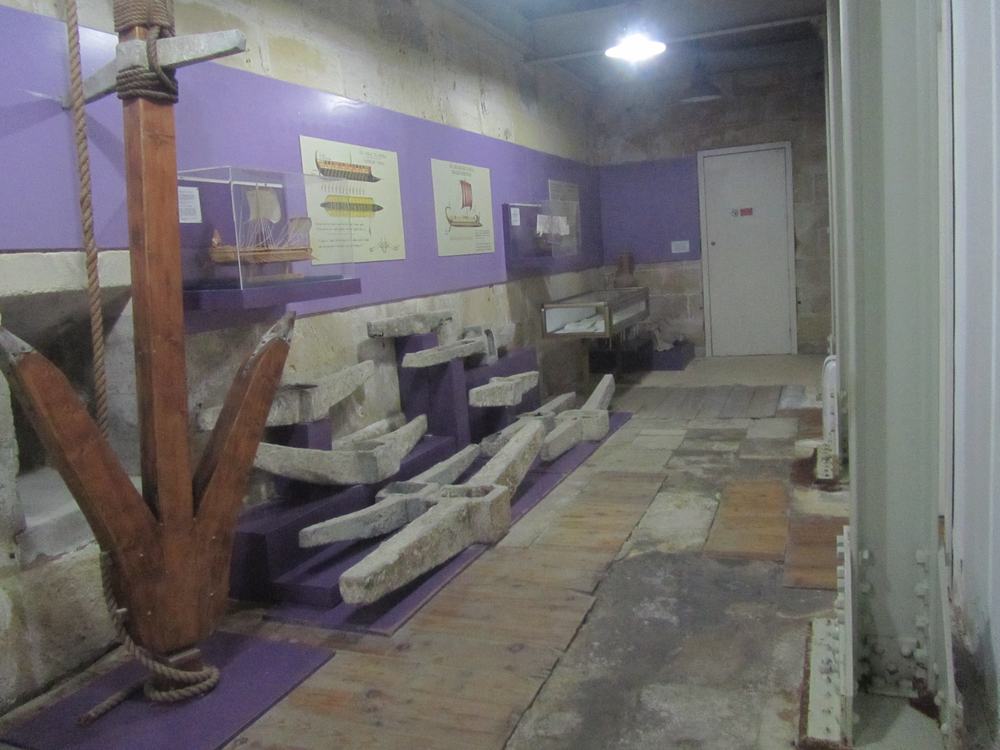
Anchors discovered on the sea bed
Historical Context Overview
| Period | Key Rulers/Influences | Dates |
|---|---|---|
| Late Antiquity | Eastern Roman (Byzantine) Empire | 500–870 CE |
| Early Islamic Period | Aghlabid and later Fatimid rule | 870–1091 CE |
| Christian Reconquest | Normans, Swabians, Angevins | 1091–1283 CE |
| Late Medieval Period | Aragonese, Catalan, Spanish | 1283–1530 CE |
Agriculture and Rural Land Use
Byzantine to Arab Transition (~870 CE)
- Before the Arab period, farming was subsistence-based, relying on cereals, legumes, olives, and limited animal husbandry.
- The Arab conquest around 870 CE is a major turning point for environmental transformation.
Arab Agricultural Innovations (870–1091 CE):
- Irrigation systems introduced: qanats (subterranean channels), waterwheels (noria), and cisterns enhanced water use efficiency.
- Crop diversification:
- Introduction of citrus fruits, cotton, sugarcane, almonds, saffron, and mulberries.
- Introduction of citrus fruits, cotton, sugarcane, almonds, saffron, and mulberries.
- Terracing and soil retention: Improved land use on hillsides, especially in Gozo and Rabat-Dingli areas.
Norman to Aragonese Period (1091–1530 CE):
- Continued use of Arab agronomic systems under Latin Christian rule.
- Farming was organized under the feudal system: smallholdings tied to tax obligations or local lords.
- Use of dry-stone walls (ħitan tas-sejjiegħ) likely continued or expanded for erosion control.
Environmental Impact:
- Greater food security through intensification, but gradual erosion and deforestation occurred as more marginal lands were cultivated.
Deforestation and Vegetation Loss
- Malta likely had patchy woodland cover in early medieval times (e.g., carob, holm oak, olive, lentisk).
- Deforestation increased steadily due to:
- Agriculture
- Grazing (especially by goats and sheep)
- Fuelwood needs for cooking, lime kilns, and possibly ship repair (during Aragonese period)
- Agriculture
Buskett area may have been one of the few woodlands to survive, though in reduced form.
Water Management and Storage
Malta’s climate challenges—hot, dry summers and no rivers—made water management central.
- Arab innovations: Small-scale irrigation, stone-lined channels, and underground cisterns attached to rural buildings.
- Wells and cisterns were standard across villages.
- Rainwater harvesting methods from this period became foundational for later systems used by the Knights.
Environmental Benefits:
- These systems were low-impact and well-adapted to Malta’s limestone topography and shallow soils.
Settlement Patterns and Human Footprint
Byzantine Period:
- Settlements were likely scattered and small, with some continuity from Roman villa sites.
- Christianity persisted in rural areas, though archaeological evidence is sparse.
Arab and Norman Periods:
- A partial depopulation during the Arab conquest (possibly intentional) led to reorganization of the population and land tenure.
- Emergence of small farming villages, and possibly fortified sites like Mdina and Bir Miftuħ.
Late Medieval Period:
- Population rebounded (estimated ~20,000 by 1500s).
- Main settlements concentrated inland for protection from corsair raids.
- Mdina became the main administrative and spiritual center.
Environmental impact:
- Urban impact remained relatively small.
- Valleys and coastal plains saw the most pressure from cultivation and livestock.
Livestock and Overgrazing
- Goats and sheep were widely kept for milk, meat, and wool.
- Overgrazing was a long-term issue:
- Suppressed tree regeneration.
- Promoted erosion, particularly on limestone slopes.
- Suppressed tree regeneration.
In later medieval statutes, goats were sometimes banned or restricted in certain areas to protect crops and prevent land degradation.
Biodiversity and Wildlife
Biodiversity:
- Fragmented woodlands and maquis supported birds, reptiles, hedgehogs, and bats.
- Bird trapping and hunting began increasing during this time, possibly driven by both subsistence and sport.
- Coastal areas and wetlands supported migratory birds, though small in number compared to pre-Neolithic times.
Flora:
- Native plants like thyme, lentisk, fennel, and capers were common in garigue and steppe habitats.
- Early cultivation of herbs and medicinal plants likely expanded during Arab rule.
Environmental Governance (Early Land Management)
- Little centralized environmental control.
- Some customary laws regulated:
- Grazing rights
- Water access
- Use of community wells or threshing floors
- Grazing rights
- Mdina’s ruling elite (from ~13th century onward) began asserting control over common land and water, especially during the Aragonese period.
Notable Environmental Sites/Practices
| Site/Practice | Relevance |
|---|---|
| Buskett area | Surviving forest or woodland area possibly used since medieval times |
| Ta' Ħaġrat valley farms | Archaeological evidence of medieval field systems |
| Arabic irrigation systems | Precursor to Knights-era aqueducts and water infrastructure |
| Mdina hilltop | Chosen for strategic and climatic reasons, minimizing exposure to sea breezes and raids |
Summary of Environmental Trends (500–1530 CE)
| Aspect | Trend/Impact |
|---|---|
| Deforestation | Moderate to high – driven by agriculture and fuelwood |
| Agriculture | Intensified – especially after Arab reforms |
| Water management | Improved – innovative, small-scale and sustainable systems |
| Biodiversity | Declining – due to habitat fragmentation and hunting |
| Urban impact | Low to moderate – population remained rural and small-scale |
| Environmental awareness | Limited – practices were pragmatic, not conservation-driven |
Legacy of the Medieval Period
Enduring impacts:
- Foundations of traditional Maltese agriculture and water storage systems.
- Rural landscape shaped by terraces, walls, and wells still visible today.
Environmental costs:
- Gradual deforestation, erosion, and loss of native woodland.
- Beginning of long-term strain on Malta’s thin soils and water table.