Climate Characteristics
Winds and Weather Patterns
Air Quality
Climate Change and Atmospheric Concerns
Policy and Mitigation Measures
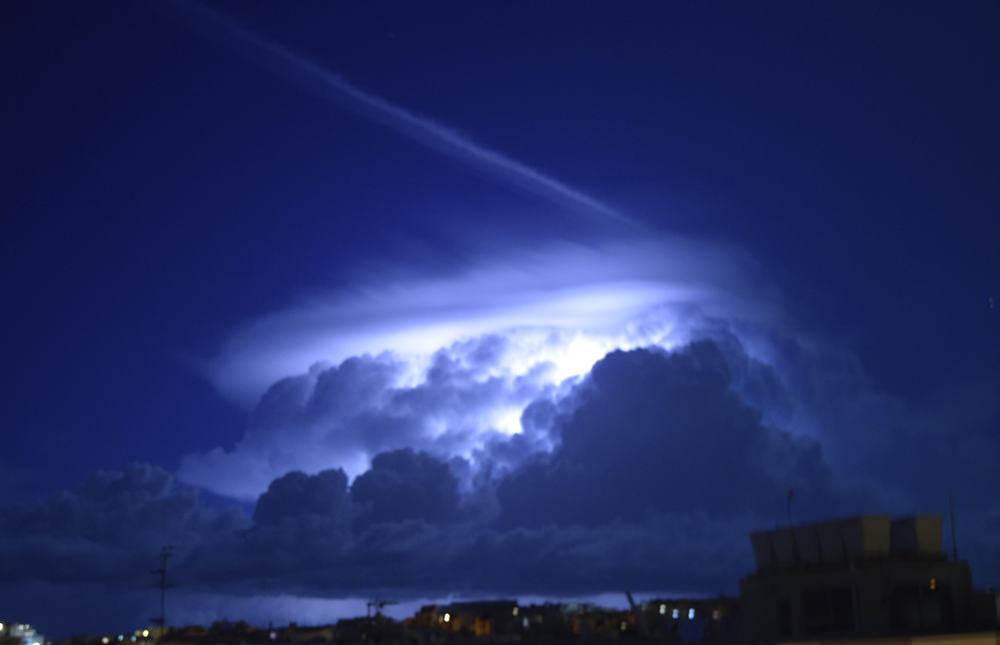
Thunder and Lightening clouds over Malta. Copyright © 2025 Stephen Yardley
The aerial environment of the Maltese Islands is shaped by their Mediterranean location, local climate, and human activity. While the islands enjoy abundant sunshine and generally good air quality, they also face atmospheric challenges from pollution and climate change. Through responsible policies, public engagement, and sustainable development, Malta can continue to protect and enhance its atmospheric environment, ensuring a healthier and more resilient future for its people and ecosystems.
Due to their central Mediterranean location, the islands experience a typical Mediterranean climate with hot, dry summers and mild, wet winters. Winds play a significant role, particularly the dry northwesterly "Majjistral" and the humid southeasterly "Xlokk." Air quality is generally good, but urbanization, traffic emissions, and industrial activities contribute to localized pollution.
Climate change poses growing risks, including rising temperatures, prolonged droughts, and more intense storms. To address these challenges, Malta promotes clean energy, emission reduction, and improved air monitoring, aiming to safeguard both public health and environmental quality.
The Maltese Islands are a relatively small landmass, and surrounding marine environment. The aerial or atmospheric environment refers to the composition, quality, and behavior of the air above and around the islands. This environment plays a critical role in the region’s climate, weather patterns, air quality, and broader ecological health. Understanding the atmospheric conditions of the Maltese Islands is essential for public health, agriculture, and environmental sustainability.
Climate Characteristics
The Maltese Islands experience a typical Mediterranean climate, marked by hot, dry summers and mild, wet winters. Average summer temperatures range from 30°C to 35°C, while winter temperatures rarely drop below 10°C. Annual rainfall is relatively low, averaging around 550 mm, with most precipitation occurring between October and March.
Humidity levels are generally high due to the surrounding sea, especially in the summer months, which can intensify the perception of heat. Sunshine is abundant, with over 3,000 hours of sunlight per year, making the Maltese climate one of the sunniest in Europe.
Winds and Weather Patterns
Winds are a defining feature of the Maltese atmospheric environment. The most prominent winds include:
- Majjistral (northwesterly): A cool and dry wind that often brings clearer skies and lower humidity.
- Xlokk (southeasterly): A hot, humid wind that can carry dust from the Sahara and raise temperatures.
- Grigal (northeasterly): Can bring heavy storms, especially during winter months.
These winds influence both daily weather and seasonal climate variations. The Sirocco, in particular, can bring fine desert dust, reducing air quality and visibility.
Air Quality
Air quality in Malta is generally good compared to urban centers in mainland Europe. However, air pollution does pose local challenges, especially in densely populated areas. The main contributors to air pollution include:
- Vehicular emissions, particularly due to the high number of private cars relative to the population.
- Construction and roadworks, which generate dust and particulate matter.
- Shipping and industrial activities, which contribute to nitrogen dioxide and sulfur dioxide levels.
- Transboundary pollution, as air masses occasionally carry pollutants from mainland Europe or North Africa.
The Maltese government monitors air quality through a national network of stations, tracking key pollutants like particulate matter (PM10 and PM2.5), nitrogen oxides, and ozone.
Climate Change and Atmospheric Concerns
Like many small island states, Malta is increasingly vulnerable to the effects of climate change, many of which manifest through the atmosphere. These include:
- Rising average temperatures and more frequent heatwaves.
- Increased droughts and reduced rainfall, affecting water supply and agriculture.
- Intensified storms and unpredictable weather patterns, with occasional flooding caused by sudden, heavy rain.
These atmospheric shifts pose risks to public health, infrastructure, and biodiversity. Urban heat islands—where built-up areas trap heat—are also becoming more common, particularly in Valletta, Sliema, and other densely developed towns.
Policy and Mitigation Measures
To address atmospheric challenges, Malta has adopted several national and EU-level strategies. These include:
- The National Air Pollution Control Programme, which outlines measures to reduce emissions from transport, industry, and energy sectors.
- Promotion of clean energy and electric vehicles, reducing dependence on fossil fuels.
- Urban greening initiatives to mitigate heat and improve air quality.
- Public awareness campaigns to encourage sustainable transport and energy use.
Furthermore, Malta participates in international climate agreements such as the Paris Agreement and is committed to EU targets for greenhouse gas reduction and air quality improvement.