Period Context: The Early Holocene
Pre-Human Natural Environment (Before 5200 BCE)
First Human Arrival: Neolithic Colonists (~5200 BCE)
Deforestation and Vegetation Change
Early Agriculture and Land Use
Water Use and Settlement Location
Biodiversity and Faunal Impact
Fire as a Land-Management Tool
Key Site: Għar Dalam Cave
Summary Table: Environmental Transformation (ca. 5200 BCE Onward)
Legacy of the First Human Settlement
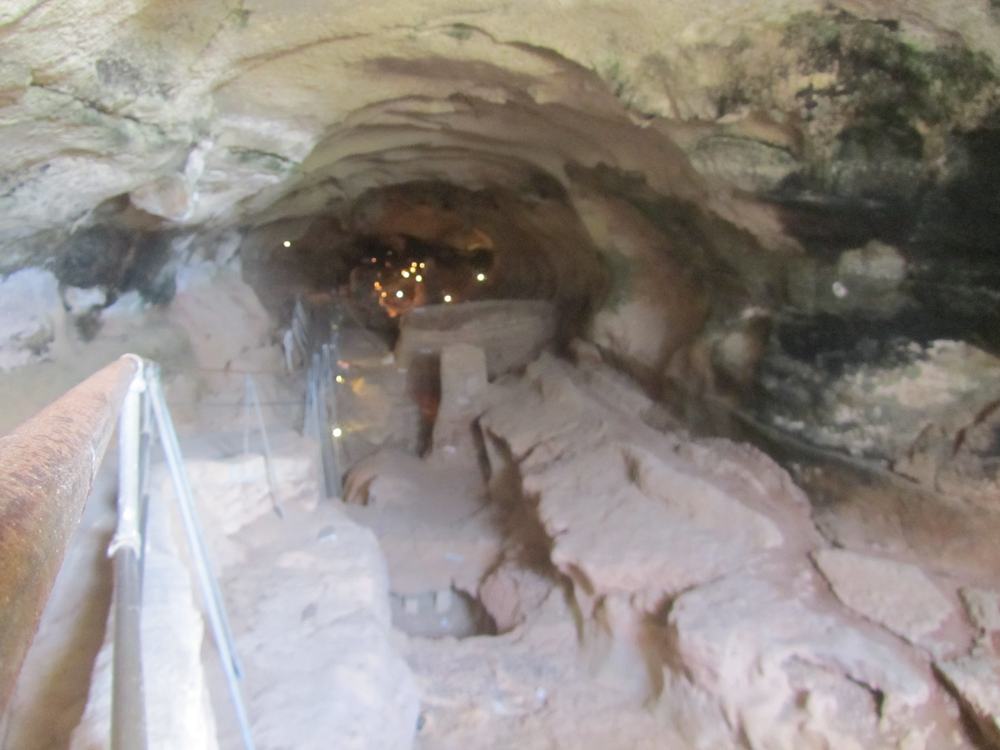
Ghar Dalam Cave
The Early Holocene & First Human Settlement of the Maltese Islands (ca. 5200 BCE) was a transformative period that marks the arrival of humans and the beginning of significant ecological change after thousands of years of relatively stable, post-glacial natural development.
Period Context: The Early Holocene
| Phase | Dates | Key Features |
|---|---|---|
| Early Holocene Climate | ~11,700 BCE–6000 BCE | Stable post-glacial warming, sea level rise, vegetation spread |
| First Human Arrival | ca. 5200 BCE | Neolithic settlers from Sicily (Stentinello culture) introduce farming |
| Għar Dalam Phase | ca. 5200–4500 BCE | Earliest cultural phase in Malta, named after the cave where evidence was found |
Pre-Human Natural Environment (Before 5200 BCE)
Climate & Geography
- Mild Mediterranean climate (warmer and wetter than today).
- Sea levels rising after the Last Glacial Maximum (~120 meters lower in 20,000 BCE).
- Maltese islands had already become isolated from Sicily by about 10,000–9000 BCE.
Flora
- Pollen records suggest:
- Mixed woodlands: Holm oak (Quercus ilex), Aleppo pine (Pinus halepensis), carob, wild olive, lentisk.
- Maquis and garigue vegetation common on ridges and shallow soils.
- Mixed woodlands: Holm oak (Quercus ilex), Aleppo pine (Pinus halepensis), carob, wild olive, lentisk.
Fauna
- Native species prior to humans:
- Dwarf elephants (Palaeoloxodon mnaidriensis) and hippos (extinct ~10,000 BCE).
- Small mammals: shrews, dormice.
- Migratory birds, reptiles, amphibians.
- No large predators or herbivores remaining after the Pleistocene.
- Dwarf elephants (Palaeoloxodon mnaidriensis) and hippos (extinct ~10,000 BCE).
Conclusion:
Malta was a relatively wild, wooded, and biodiverse archipelago with no significant large mammals at the time of first human contact.
First Human Arrival: Neolithic Colonists (~5200 BCE)
Origin & Culture
- Settlers came from Sicily, likely part of the Stentinello culture.
- Brought:
- Farming knowledge
- Domesticated plants and animals
- Pottery and stone tools
- Farming knowledge
Key Site: Għar Dalam Cave
- Contains the earliest layers of Neolithic human activity.
- Stratigraphy includes layers of:
- Animal bones (e.g., deer, birds)
- Charcoal (evidence of fire)
- Pottery shards and flint tools
- Animal bones (e.g., deer, birds)
Deforestation and Vegetation Change
Initial Impact
- Settlers began clearing forest for:
- Small-scale farming
- Settlements
- Fuel (cooking, heating, pottery firing)
- Small-scale farming
- Pollen records from cores at Marsaxlokk, Burmarrad, and Buskett show:
- Rapid decline in arboreal pollen (oak, pine)
- Increase in herbaceous species and cereals (wheat, barley)
- Charcoal particles – evidence of deliberate burning
- Rapid decline in arboreal pollen (oak, pine)
Garigue Expansion
- As forests were cleared, garigue and steppe vegetation spread.
- This secondary vegetation became dominant in areas with shallow soils.
Conclusion:
The Neolithic settlement initiated Malta’s first major wave of deforestation, a trend that would continue for millennia.
Early Agriculture and Land Use
Farming Introduction
- Cultivated plants:
- Cereals (wheat, barley)
- Legumes (lentils, peas)
- Possibly flax for textiles
- Cereals (wheat, barley)
- Domesticated animals:
- Sheep, goats, pigs, and cattle
- Brought over by boat from Sicily
- Sheep, goats, pigs, and cattle
Land Use Patterns
- Farming was likely slash-and-burn on small clearings near freshwater sources.
- Early fields may have been in Burmarrad Valley, Wied Żembaq, or Marsaxlokk, where soils are deeper.
Impact:
- Soil degradation began early due to overuse of shallow soils.
- Grazing pressure from goats likely suppressed woodland regrowth.
Water Use and Settlement Location
- No rivers or lakes meant reliance on:
- Natural springs (e.g., near Buskett and Rabat)
- Rainwater catchment in natural rock basins
- Natural springs (e.g., near Buskett and Rabat)
- Early settlers likely chose lowland valleys near water sources and arable land.
Settlement Pattern
- Small, dispersed hamlets or caves.
- Early dwellings possibly made from organic materials (no surviving structures from this phase).
Biodiversity and Faunal Impact
- Rapid decline in wild species post-settlement:
- Overhunting of birds and small mammals
- Habitat loss from clearing and grazing
- Overhunting of birds and small mammals
- Introduction of invasive species (e.g. rats, dogs, possibly rabbits) through human transport.
Extinct or Vanished Species:
- Several native birds and mammals disappeared from the fossil record by the end of the Neolithic.
Fire as a Land-Management Tool
- Charcoal layers in Għar Dalam and other sediment cores indicate:
- Use of fire for land clearing
- Possibly seasonal burning to promote pasture
- Use of fire for land clearing
Environmental Consequences:
- Altered soil chemistry
- Increased erosion from slope burn-off
- More fire-adapted species like thyme and fennel became common
Key Site: Għar Dalam Cave
| Layer | Contents |
|---|---|
| Upper layers (Neolithic) | Pottery, charcoal, flint tools, animal bones |
| Middle layers | Fossil bones of red deer, birds, turtles |
| Lower layers | Dwarf elephant and hippopotamus fossils (extinct before human arrival) |
This cave provides a continuous record from the late Pleistocene to early Holocene and is the key stratigraphic archive for Malta’s prehistoric ecology.
Summary Table: Environmental Transformation (ca. 5200 BCE Onward)
| Aspect | Impact |
|---|---|
| Vegetation | Rapid forest loss, shift to garigue and agricultural fields |
| Agriculture | Introduced crops and livestock transformed land use |
| Water use | Minimal infrastructure, reliant on springs and rainfall |
| Biodiversity | Decline of native species; invasive species introduced |
| Fire use | Regular burning for land clearing and possibly pasture |
| Settlement | Small-scale, near valleys and water sources |
Legacy of the First Human Settlement
Enduring Contributions:
- First use of Malta as a managed, human-altered landscape.
- Introduction of staple crops and domesticated animals still present today.
Lasting Environmental Costs:
- First wave of deforestation and species extinction.
- Set the ecological stage for later pressure from the Temple Builders.